Jennifer Aniston

Jennifer Joanna Aniston (born February 11, 1969) is an American actress. She rose to international fame for her role as Rachel Green on the television sitcom Friends from 1994 to 2004, which earned her Primetime EmmyGolden Globe, and Screen Actors Guild awards. Aniston has consistently ranked among the world’s highest-paid actresses, as of 2023.[1][2]

The daughter of actors John Aniston and Nancy Dow, she began working as an actress at an early age with an uncredited role in the 1988 film Mac and Me. Her first major film role came in the 1993 horror comedy Leprechaun. She has since starred in a string of successful comedy films such as Office Space (1999), Bruce Almighty (2003), The Break-Up (2006), Marley & Me (2008), Just Go with It (2011), Horrible Bosses (2011), We’re the Millers (2013), Dumplin’ (2018), and Murder Mystery (2019). Aniston also starred in the acclaimed independent films The Good Girl (2002), Friends with Money (2006), and Cake (2014). She returned to television in 2019, producing and starring in the Apple TV+ drama series The Morning Show, for which she received a Screen Actors Guild Award.

Aniston has been included in numerous magazines’ lists of the world’s most beautiful women. Her net worth is estimated as US$300 million, and her box office gross is over $1.6 billion worldwide.[3] She is the recipient of a star on the Hollywood Walk of Fame and is the co-founder of the production company Echo Films, established in 2008.

Damon Wayans

Damon Kyle Wayans Sr. (/ˈdmən ˈw.ənz/;[1] born September 4, 1960)[2] is an American stand-up comedian, actor, producer, and writer. A member of the Wayans family of entertainers, Damon performed as a comedian and actor throughout the 1980s, including a brief stint on the NBC sketch comedy series Saturday Night Live. He later joined his family on Fox‘s sketch comedy show In Living Color (1990–1992), and wrote and performed on his own animated series Waynehead (1996–1997) and live-action series Damon (1998). Since then, he has starred in a number of films and television shows, some of which he has co-produced or co-written, including Mo’ MoneyThe Last Boy ScoutMajor PayneBulletproof, and the sitcoms My Wife and Kids and Poppa’s House, the latter featuring his son Damon Wayans Jr. From 2016 to 2019, he starred as Roger Murtaugh in the Fox television series Lethal Weapon.

Peter Sellers

Peter Sellers (born Richard Henry Sellers; 8 September 1925 – 24 July 1980) was an English actor and comedian. He first came to prominence performing in the BBC Radio comedy series The Goon Show. Sellers featured on a number of hit comic songs, and became known to a worldwide audience through his many film roles, among them Chief Inspector Clouseau in The Pink Panther series.

Born in Southsea, Sellers made his stage debut at the Kings Theatre, Southsea, when he was two weeks old. He began accompanying his parents in a variety act that toured the provincial theatres. He first worked as a drummer and toured around England as a member of the Entertainments National Service Association (ENSA). He developed his mimicry and improvisational skills during a spell in Ralph Reader‘s wartime Gang Show entertainment troupe, which toured Britain and the Far East. After the war, Sellers made his radio debut in ShowTime, and eventually became a regular performer on various BBC Radio shows. During the early 1950s, Sellers, along with Spike MilliganHarry Secombe, and Michael Bentine, took part in the successful radio series The Goon Show, which ended in 1960.

Sellers began his film career during the 1950s. Although the bulk of his work was comedic, often parodying characters of authority such as military officers or policemen, he also performed in other film genres and roles. Films demonstrating his artistic range include I’m All Right Jack (1959), Stanley Kubrick‘s Lolita (1962) and Dr. Strangelove (1964), What’s New Pussycat? (1965), Casino Royale (1967), The Party (1968), Being There (1979) and five films of the Pink Panther series (1963–1978). Sellers’s versatility enabled him to portray a wide range of comic characters using different accents and guises, and he would often assume multiple roles within the same film, frequently with contrasting temperaments and styles. Satire and black humour were major features of many of his films, as they had been in his radio and record performances, and they had a strong influence on a number of later comedians.

Sellers was nominated three times for an Academy Award, twice for the Academy Award for Best Actor, for his performances in Dr. Strangelove and Being There, and once for the Academy Award for Best Live Action Short Film for The Running Jumping & Standing Still Film (1959). He won the BAFTA Award for Best Actor in a Leading Role for his role in I’m All Right Jack and was nominated an additional three times for the previous two films and the satire Only Two Can Play. In 1980 he won the Golden Globe Award for Best Actor – Motion Picture Musical or Comedy for his role in Being There, having previously been nominated three times in the same category. Turner Classic Movies calls Sellers “one of the most accomplished comic actors of the late 20th century”.[1]

In his personal life, Sellers struggled with depression and insecurities. An enigmatic figure, he often claimed to have no identity outside the roles that he played. His behaviour was often erratic and compulsive, and he frequently clashed with his directors and co-stars, especially in the mid-1970s, when his physical and mental health, together with his alcohol and drug problems, were at their worst. Sellers was married four times and had three children from his first two marriages. He died from a heart attack, aged 54, in 1980. English filmmakers the Boulting brothers described Sellers as “the greatest comic genius this country has produced since Charles Chaplin“.[2]
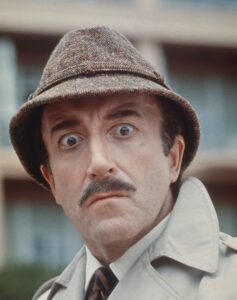

Winona Rider

Winona Laura Horowitz[1] (born October 29, 1971),[1] known professionally as Winona Ryder, is an American actress. Having come to attention playing quirky characters in the late 1980s,[2] she achieved success with her more dramatic performances in the 1990s. Ryder’s many accolades include a Golden Globe, as well as nominations for two Academy Awards, a BAFTA Award, and a Grammy Award.

Following her film debut in Lucas (1986), Ryder rose to prominence when she starred in the comedy Beetlejuice (1988). Major parts in Heathers (1989), Edward Scissorhands (1990), Mermaids (1990), and Bram Stoker’s Dracula (1992) came next. She earned two consecutive Oscar nominations—Best Supporting Actress and Best Actress—for her portrayals of a socialite in The Age of Innocence (1993) and Jo March in Little Women (1994), respectively. Her subsequent work included starring roles in Reality Bites (1994), How to Make an American Quilt (1995), The Crucible (1996), Alien Resurrection (1997), Celebrity (1998), Girl, Interrupted (1999), and Mr. Deeds (2002).

Ryder took a break from acting in the early 2000s, later returning with smaller appearances in films such as Star Trek (2009), Black Swan (2010), and The Dilemma (2011). She portrayed Lois Wilson in the Hallmark television film When Love Is Not Enough (2010). Since 2016, she has played Joyce Byers on the Netflix series Stranger Things, for which she received her third Golden Globe nomination. She has since starred in the HBO miniseries The Plot Against America (2020) and the comedy horror sequel Beetlejuice Beetlejuice (2024
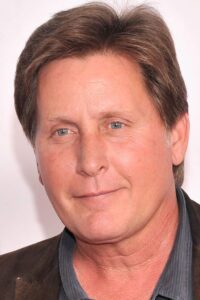
Emilio Estevez

Emilio Estevez (/ɛˈmɪli ɛˈstɛvəs/; born May 12, 1962) is an American actor and filmmaker. The son of actor Martin Sheen and the older brother of Charlie Sheen, he made his film debut with an uncredited role in Badlands (1973). He later received his first credited appearance with a supporting role in the coming-of-age film Tex (1982).

Estevez gained mainstream recognition with a starring role in the drama film The Outsiders (1983), leading him to be associated with a group of young actors known as the “Brat Pack.” After starring in the films Nightmares (1983) and Repo Man (1984), Estevez had his breakout with starring roles in the commercially successful Brat Pack films The Breakfast Club (1985) and St. Elmo’s Fire (1985). Following his breakout, he starred in the films Maximum Overdrive (1986), Stakeout (1987), Young Guns (1988), and Young Guns II (1990). In the 1990s, Estevez played the lead role of Gordon Bombay in the film series The Mighty Ducks (1992–1996). He also starred in the films Freejack (1992), Loaded Weapon 1 (1993), Another Stakeout (1993), and Judgment Night (1993).

Estevez made his directorial debut with the crime film Wisdom (1986), which he also starred in. He later directed and starred in the films Men at Work (1990) and The War at Home (1996), and following the final film in the Mighty Ducks series, Estevez primarily focused on directorial work. He directed and starred in the drama film Bobby (2006), which was nominated for the Golden Globe Award for Best Motion Picture – Drama, and also earned Estevez a Screen Actors Guild Award nomination. He also directed and starred in the films The Way (2010) and The Public (2018).

Outside of directing in recent years, Estevez had a starring voice role in the English dub of the fantasy film Arthur and the Invisibles (2006) and reprised his role as Gordan Bombay in a regular capacity on the Disney+ television series The Mighty Ducks: Game Changers (2021–2022).

Dean Martin

Dean Martin (born Dino Paul Crocetti; June 7, 1917 – December 25, 1995) was an American singer, actor, and comedian. Nicknamed the “King of Cool“, he is regarded as one of the most popular entertainers of the mid-20th century.[2][3] Martin gained his career breakthrough together with comedian Jerry Lewis, billed as Martin and Lewis, in 1946. They performed in nightclubs and later had numerous appearances on radio and television and in films.
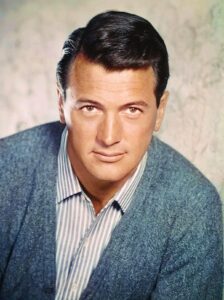
Following an acrimonious ending of the partnership in 1956, Martin pursued a solo career as a performer and actor. He established himself as a singer, recording numerous contemporary songs as well as standards from the Great American Songbook. Martin became one of the most popular acts in Las Vegas and was known for his friendship with fellow artists Frank Sinatra and Sammy Davis Jr., who together with several others formed the Rat Pack.

Starting in 1965, Martin was the host of the television variety program The Dean Martin Show, which centered on Martin’s singing and comedic talents and was characterized by his relaxed, easy-going demeanor. From 1974 to 1984, Martin was roastmaster on The Dean Martin Celebrity Roast, a popular show that drew celebrities, comedians and politicians. Throughout his career, Martin performed on concert stages, in nightclubs and audio recordings and appeared in 85 film and television productions and sold 12 million records in the United States alone, over 50 million worldwide. Martin’s best-known songs include “Ain’t That a Kick in the Head?“, “Memories Are Made of This“, “That’s Amore“, “Everybody Loves Somebody“, “You’re Nobody till Somebody Loves You“, “Sway“, and “Volare“.

1949 My Friend Irma Steve Laird Martin and Lewis
1950 My Friend Irma Goes West
At War with the Army 1st Sgt. Vic Puccinelli
Screen Snapshots: Meet the Winners Short
Screen Snapshots: Thirtieth Anniversary Special
1951 That’s My Boy Bill Baker Martin and Lewis
1952 The Stooge Bill Miller
Sailor Beware Al Crowthers
Jumping Jacks Corp. Chick Allen
Road to Bali Man in Lala’s dream Cameo, Uncredited
1953 Scared Stiff Larry Todd Martin and Lewis
The Caddy Joe Anthony
Money from Home Herman ‘Honey Talk’ Nelson
1954 Living It Up Dr. Steve Harris
3 Ring Circus Peter ‘Pete’ Nelson
1955 You’re Never Too Young Bob Miles
Artists and Models Rick Todd
1956 Screen Snapshots: Hollywood, City of Stars Short
Pardners Slim Mosely Jr. / Slim Mosely Sr. Martin and Lewis
Hollywood or Bust Steve Wiley
1957 Ten Thousand Bedrooms Ray Hunter
1958 The Young Lions Michael Whiteacre
Some Came Running Bama Dillert (professional gambler)
1959 Rio Bravo Dude (‘Borrachón’)
Career Maurice ‘Maury’ Novak
1960 Who Was That Lady? Michael Haney Nominated—Golden Globe Award for Best Actor – Motion Picture Musical or Comedy
Bells Are Ringing Jeffrey Moss
Ocean’s 11 Sam Harmon
Pepe Dean Martin Cameo
1961 All in a Night’s Work Tony Ryder
Ada Bo Gillis
1962 Sergeants 3 Sgt. Chip Deal
The Road to Hong Kong The ‘Grape’ on plutonium Cameo, Uncredited
Who’s Got the Action? Steve Flood
Something’s Got to Give Nicholas ‘Nick’ Arden (unfinished)
1963 38-24-36 Self
Come Blow Your Horn The Bum Uncredited
Toys in the Attic Julian Berniers
4 for Texas Joe Jarrett
Who’s Been Sleeping in My Bed? Jason Steel
1964 What a Way to Go! Leonard ‘Lennie’ Crawley
Robin and the 7 Hoods Little John
Kiss Me, Stupid Dino
1965 The Sons of Katie Elder Tom Elder
Marriage on the Rocks Ernie Brewer
1966 The Silencers Matt Helm
Birds Do It Dean Martin
Texas Across the River Sam Hollis
Murderers’ Row Matt Helm
1967 Rough Night in Jericho Alex Flood
The Ambushers Matt Helm
1968 Rowan & Martin at the Movies Short
How to Save a Marriage and Ruin Your Life David Sloane
Bandolero! Dee Bishop
5 Card Stud Van Morgan
1969 The Wrecking Crew Matt Helm
1970 Airport Capt. Vernon Demerest
1971 Something Big Joe Baker
1973 Showdown Billy Massey
1975 Mr. Ricco Joe Ricco
1981 The Cannonball Run Jamie Blake
1984 Cannonball Run II
Terror in the Aisles (archival footage)

John Ritter

Johnathan Southworth Ritter[1][2] (September 17, 1948 – September 11, 2003) was an American comedian and actor. He was a son of the singing cowboy star Tex Ritter and the father of actors Jason and Tyler Ritter. He is best known for playing Jack Tripper on the ABC sitcom Three’s Company (1977–1984), and received a Primetime Emmy Award and a Golden Globe Award for the role in 1984. Ritter briefly reprised the role on the spin-off Three’s a Crowd, which aired for one season, producing 22 episodes before its cancellation in 1985.

He appeared in over 100 films and television series combined and performed on Broadway, with roles including adult Ben Hanscom in It (1990), Problem Child (1990), Problem Child 2 (1991), a dramatic turn in Sling Blade (1996), and Bad Santa in 2003 (his final live action film, which was dedicated to his memory). In 2002, Don Knotts called Ritter the “greatest physical comedian on the planet”. His final roles include voicing the title character on the PBS children’s program Clifford the Big Red Dog (2000–2003), for which he received four Daytime Emmy Award nominations, and as Paul Hennessy on the ABC sitcom 8 Simple Rules (2002–2003). His style of comedy is based on musical and character comedy.

Sammy Davis Jr.

Samuel George Davis Jr. (December 8, 1925 – May 16, 1990) was an American singer, actor, comedian, dancer, and musician.

At age two, Davis began his career in Vaudeville with his father Sammy Davis Sr. and the Will Mastin Trio, which toured nationally, and his film career began in 1933. After military service, Davis returned to the trio and became a sensation following key nightclub performances at Ciro’s (in West Hollywood) in 1951, including one after the Academy Awards ceremony. With the trio, he became a recording artist. In 1954, at the age of 29, he lost his left eye in a car accident. Several years later, he converted to Judaism, finding commonalities between the oppression experienced both by black Americans and Jewish communities.[2] In 1958, he faced a backlash for his involvement with a white woman at a time when interracial relationships were taboo in the U.S. and when interracial marriage was not legalized nationwide until 1967.[3]

Davis had a starring role on Broadway in Mr. Wonderful with Chita Rivera (1956). In 1960, he appeared in the Rat Pack film Ocean’s 11. He returned to the stage in 1964 in a musical adaptation of Clifford Odets‘s Golden Boy. Davis was nominated for a Tony Award for his performance. The show featured the first interracial kiss on Broadway.[4] In 1966, he had his own TV variety show, titled The Sammy Davis Jr. Show. While Davis’s career slowed in the late 1960s, his biggest hit, “The Candy Man“, reached the top of the Billboard Hot 100 in June 1972, and he became a star in Las Vegas, earning him the nickname “Mister Show Business”.[5] Davis’s popularity helped break the race barrier of the segregated entertainment industry.[6] One day on a golf course with Jack Benny, he was asked what his handicap was. “Handicap?” he asked. “Talk about handicap. I’m a one-eyed Negro who’s Jewish.”[7][8] This was to become a signature comment.[9]

After reuniting with Frank Sinatra and Dean Martin in 1987, Davis toured with them and Liza Minnelli internationally, before his death in 1990. He died in debt to the Internal Revenue Service,[10] and his estate was the subject of legal battles after the death of his wife.[11] Davis Jr.’s final album, the country-tinged Closest of Friends (1982), was a departure from his usual musical style.[12] Davis was awarded the Spingarn Medal by the NAACP and was nominated for a Golden Globe Award and an Primetime Emmy Award for his television performances. He was a recipient of the Kennedy Center Honors in 1987, and in 2001, he was posthumously awarded the Grammy Lifetime Achievement Award. In 2017, Davis was inducted into the National Rhythm & Blues Hall of Fame.

Rock Hudson

Rock Hudson (born Roy Harold Scherer Jr.; November 17, 1925 – October 2, 1985) was an American actor. One of the most popular film stars of his time, he had a screen career spanning more than three decades, and was a prominent figure in the Golden Age of Hollywood.

Hudson achieved stardom with his role in Magnificent Obsession (1954),[1] followed by All That Heaven Allows (1955), and Giant (1956), for which he received a nomination for the Academy Award for Best Actor. Hudson also found continued success with a string of romantic comedies co-starring Doris DayPillow Talk (1959), Lover Come Back (1961), and Send Me No Flowers (1964). During the late 1960s, his films included Seconds (1966), Tobruk (1967), and Ice Station Zebra (1968). Unhappy with the film scripts he was offered,[2] Hudson formed his own film production companies, first 7 Pictures Corporation, then later Gibraltar Pictures, to have more control over his roles; later he turned to television, starring in the mystery series McMillan & Wife (1971–1977). His last role was as a guest star on the fifth season (1984–1985) of the primetime ABC soap opera Dynasty, until an AIDS-related illness made it impossible for him to continue.[2]

Although he was discreet regarding his sexual orientation, it was known among Hudson’s colleagues in the film industry that he was gay. In 1984, Hudson was diagnosed with AIDS. The following year, he became one of the first celebrities to disclose his AIDS diagnosis. Hudson was the first major American celebrity to die from an AIDS-related illness, on October 2, 1985, at age 59.[3][4]

Jean Harlow

“Harlow, Jean: Picture of a movie Queen” Madoona Vogue

According to Camille Paglia, the notion that blondes have more fun was started in Hollywood by Harlow. Paglia noted “The woman who really started all this in Hollywood was Jean Harlow, with that platinum blonde look which was so incredibly unnatural. With her it was associated with being a harlot — she was mimicking the slouchy, louche look of someone who’s a machine for pleasure.”[117]

She is noted to have inspired Marilyn MonroeMadonna, and others.[118][119][120]

Her name was given to a cocktail, the “Jean Harlow”, which is equal parts light rum and sweet vermouth.[121][122]

Blues musician Lead Belly wrote the song “Jean Harlow” while in prison upon hearing about her death.[123]

The French composer Charles Koechlin composed the piece Épitaphe de Jean Harlow (opus 164) in 1937.[124]

On February 8, 1960, Jean Harlow was given a star on the Hollywood Walk of Fame located at 6910 Hollywood Boulevard on the south part of the Hollywood Boulevard in Los Angeles, California.[125]

Kim Carnes‘s hit “Bette Davis Eyes” (1981) contains the line “her hair is Harlow gold.”[126]

Harlow’s signature, hands, and footprints were imprinted in cement on September 29, 1933, in the 24th ceremony at Grauman’s Chinese Theater and are located near the forecourt on the west side of the box office at 6925 Hollywood Boulevard, Hollywood, California.[127][128]